
Just like with any “Masterclass” – the word “Master” in the title of a training course doesn’t automatically bestow the learner with the title of “Master” on completion of the training. The word “Master” in the title of training course indicates that the training not only teaches to a high standard, but also that it is taught by an industry expert in the subject being taught.
In order to master any new skills, extensive further practice is always required.
I’ll give you a perfect example of this – in Perth, Western Australia (around 2010 or thereabouts) I was honoured to be invited by my singing teacher at the time, to attend a singing masterclass at the prestigious WA Academy of Performing Arts (WAAPA) part of Edith Cowan University.
The class was taught by a Master singing coach to the stars (actually megastars) who was visiting from the USA. His name is Greg Enriquez and he is such an amazing and wonderful teacher, one of the best coaches in the industry. That day I learned some amazing new singing skills.
However – my attendance at Greg’s 1-day singing masterclass didn’t automatically make me a Master singer and I never expected that it would. To master any new skills, further practice is always required.
In ancient history, the title of “Master” was traditionally reserved for “One who teaches”. Traditionally it would take 15-20 years for an individual to attain the level of knowledge & expertise required to attain the knowledge and proficiency required to practice as a healer. Due to how long it took to complete the training, proficiency to practice as a healer and proficiency to teach was often considered one and the same.
In modern times it’s very different. The length of training required to train & qualify as a Complementary Therapist is much less than 15-20 years. Sound Therapy being among the shortest, as there is no prescribing and its not a “touch therapy” – ie. the therapist isn’t ever required to touch the person being treated with their own hands, such as Reflexology which requires training to be of a much longer duration.
As awe-inspiring as it is, the classroom won’t provide you with the immense boost of confidence that only the experience of successful client outcomes in the real world will bring.
The comprehensive training you receive with our Diploma studies will provide you with the knowledge and skills you need to achieve those successful client outcomes right from the moment you finish your Level 3. Where you are assessed as competent to Practitioner standard, and able to commence your client case studies, you are well on the way to mastering your intuitive abilities to work with sound. How long it takes for you to master those abilities is up to you, and the amount of time and effort you put into your practice.
So you see – the classification of master doesn’t come solely from a training course, it comes only once you have mastered the new knowledge and skills learned. True mastery comes from real life experience as you practice and master your new skills in the real world. Trusting your abilities even more with each successful outcome achieved with those you work with, as you further practice and master your abilities as an intuitive sound therapist.
When you have mastered a learned skill, the skill becomes intuitive, and then it’s a “knowing”.
You will instinctively know – you have got this!
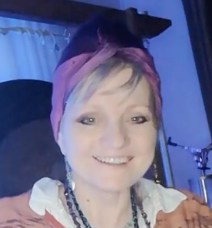
Sharon Quigley
Founder & Principal
Irish Academy of Sound Therapy
Founder & Principal of Irish Academy of Sound Therapy, Sharon Quigley has over 30+ years experience with sound & frequency medicine in a range of clinical, research & education settings, which commenced in the 1990’s at one of the busiest Naturopathy Clinics in Perth, Western Australia.
Sharon’s teaching career commenced in 2002, at Westcoast College of TAFE, working as a part-time College Lecturer until 2007. During this time Sharon also studied part-time for a Bachelor of Arts (Training & Development) at Edith Cowan University in Perth, Western Australia.